Technical Analysis
Articles in this Hash Hedge blog category.
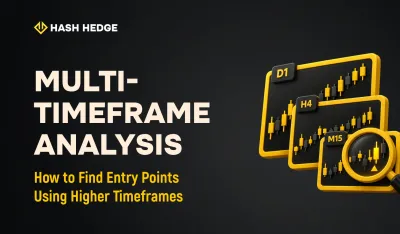
Multi-Timeframe Analysis in Crypto: How to Find Better Entry Points
Learn how to use higher, intermediate, and lower timeframes to identify market direction, entry zones, and trade triggers. A practical framework for Funded Traders.

Crypto Trading Sessions: When to Enter the Market and When to Stay Out
4 crypto trading sessions, Kill Zones, weekly market structure, their impact on order blocks and FVGs, and session management on a Funded Account.

Premium and Discount Zones in Crypto: How to Identify Cheap and Expensive Prices Based on Market Structure
What equilibrium, premium, and discount mean in Smart Money concepts. The OTE zone, its connection with order blocks and FVGs, and how to apply it in trends and ranges on a Funded Account.

BOS and CHOCH in Crypto: Break of Structure, Change of Character, and Entry Points
How to identify trend continuation (BOS) and the first sign of a reversal (CHOCH) on crypto charts. How they relate to order blocks and liquidity grabs, and how to apply them on a Funded Account.

Order Blocks in Crypto Trading: How to Find, Validate, and Trade Them
What an order block is, how to distinguish valid from invalid ones, and how they relate to Fair Value Gaps and liquidity grabs. Applying order blocks on a Funded Account with Stop Loss calculation.
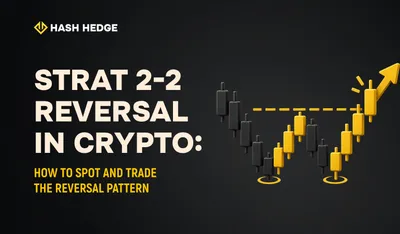
Strat 2-2 Reversal in Crypto: How to Spot and Trade the Reversal Pattern
A breakdown of the 2-2 Reversal pattern from The Strat for crypto trading: identification, timeframe alignment, entry points, Stop Loss, and how to apply it on a Funded Account.
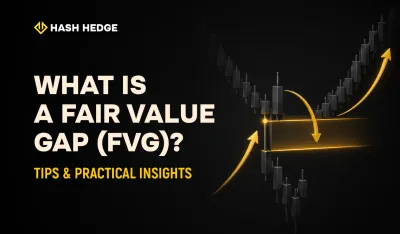
What Is Fair Value Gap (FVG) in Crypto Trading and How to Use It
A Fair Value Gap (FVG) is a price imbalance left behind after an impulsive move. Learn how to identify the three-candle FVG pattern on BTC and ETH, find high-probability entry zones, and trade them in prop trading.
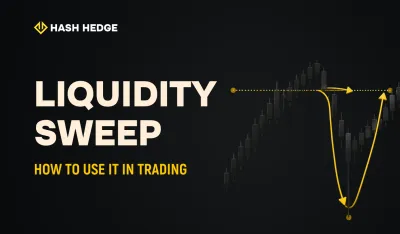
Liquidity Sweep in Trading: What It Is and How to Use It
A liquidity sweep is a move beyond a key price level that triggers stop-losses before reversing. Learn how liquidity sweeps work on BTC and ETH, how they differ from liquidity grabs and stop hunts, and how to use them in your trading.

False Breakout vs. Liquidity Sweep vs. Stop Hunt: What's the Difference and How to Identify Each on the Chart
Learn how to distinguish false breakouts, liquidity grabs, and stop hunts on crypto charts and how to use each pattern to improve your trade entries.

Volume in Trading: How to Understand the Strength of Price Movement
Learn how volume in trading helps confirm price movement, assess trend strength, analyze volume spikes, and use volume indicators in crypto trading strategies.

Fakeouts in Trading: Why Markets Trap Traders
Learn how false breakouts work, what causes liquidity grabs and stop hunting, and how to identify fakeouts to avoid traps and improve risk management.

Breakout Trading: How to Identify High-Probability Opportunities
Learn how breakout trading works, how to confirm breakouts with volume and momentum, avoid false breakouts, and manage risk in crypto markets.
Subscribe to our newsletter
Stay updated with our newsletter!